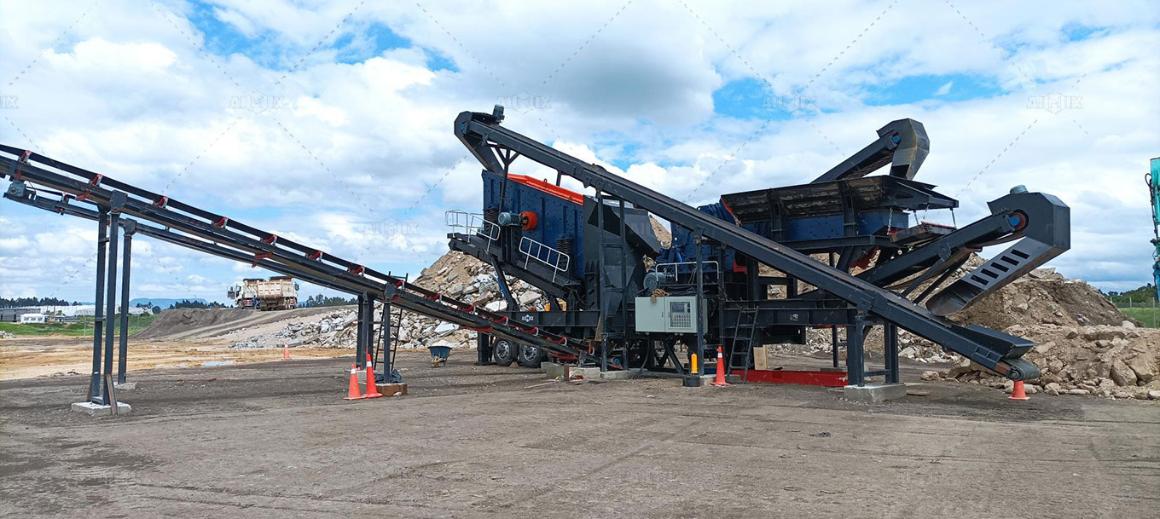
Choosing Mobile Impact Crushing for Concrete, Asphalt, and Recycled Aggregates
The construction industry produces waste. Millions of tonnes of concrete, asphalt, and mixed debris every year. The responsible contractor sees this waste differently. Not as a disposal problem. As a resource. Recycled concrete aggregate can replace virgin stone in road base, drainage layers, and even new concrete. Recycled asphalt can be incorporated into new pavement mixes. But processing this material requires the right equipment. A mobile impact crusher for sale is the right tool. It handles rebar. It breaks down asphalt slabs. It produces a cubical product. This article argues that mobile impact crushing is not just an option for recycling. It is the best option. We will look at why impactors excel with these materials, how to select the right machine, and what to expect in terms of wear and maintenance. The goal is to help you make a confident, caring choice for your recycling operation.
Why Impactors Excel with Recycled Materials
Concrete and asphalt are not homogeneous. They contain aggregates of different sizes, embedded in a matrix of cement or bitumen. A jaw crusher compresses this material. It fractures it along natural planes. The resulting product is flaky and elongated. An impact crusher smashes the material. The high-speed rotor and blow bars shatter the cement matrix. The aggregates are freed. The product is cubical. Cubical particles pack better. They interlock. They produce a stronger base course. The argument is that for recycled materials, product shape matters. A jaw crusher can reduce size. An impact crusher improves quality. The contractor who chooses an impactor produces a premium product. The contractor who chooses a jaw produces a commodity. The price difference reflects the quality difference.
Concrete contains rebar. Asphalt may contain steel reinforcing mesh. These contaminants destroy jaw crushers. They jam the chamber. They crack the jaw dies. They damage the pitman. An impact crusher handles rebar differently. The blow bars strike the concrete. The rebar is pushed through the chamber. It exits with the product. The rebar can be removed by a magnetic separator after crushing. The impact crusher is not damaged. The blow bars may wear faster. They are consumable. The argument is that a recycling operation without an mobile crusher is a recycling operation that spends too much time removing steel before crushing. Pre-crushing steel removal is expensive and slow. An impactor accepts the steel. It keeps crushing. The productivity advantage is decisive.
Selecting the Right Mobile Impactor
Mobile impact crushers vary in rotor size and blow bar configuration. A larger rotor provides more crushing energy. It processes harder materials. It handles larger feed sizes. For concrete recycling, a rotor diameter of 1,000 to 1,200 millimetres is adequate. For asphalt, a smaller rotor may suffice. The blow bar configuration matters. Four-bar rotors are common. They provide good crushing action. The argument is that blow bar material is more important than rotor size. High-chrome blow bars resist abrasion. They last longer in concrete. Ceramic-impregnated blow bars last even longer. The premium for high-quality blow bars is 20 to 40 percent. The value is reduced downtime for blow bar changes. A caring contractor calculates the cost per tonne of wear parts. The higher-quality bar often has a lower cost per tonne.
A mobile impact crusher for recycling must include a magnetic separator. The magnet removes steel from the product stream. It protects downstream equipment. It improves product quality. The argument is that a crusher without a magnet is not a recycling crusher. It is a concrete shredder that produces steel-contaminated aggregate. The magnet should be positioned above the discharge conveyor. It should be adjustable. It should be powerful enough to lift rebar pieces. The grid deck is another essential feature. It allows fine material to bypass the crushing chamber. It reduces over-crushing. It improves throughput. The caring recommendation is to specify both features. They add cost. They add value. The value exceeds the cost.
Wear and Maintenance Expectations
Blow bars wear. The wear rate depends on the material. Crushing concrete with high-chrome blow bars may yield 500 to 1,500 hours of life. Crushing asphalt may yield 300 to 800 hours. Asphalt is more abrasive. It contains sand and stone. The bitumen is not abrasive, but the aggregate is. The caring contractor tracks blow bar wear. They measure the wear pattern. They rotate the blow bars to extend life. They flip them when one side wears. They replace them when the wear reaches the bar's body. The cost of a set of blow bars is $3,000 to $8,000. The cost of downtime for unplanned replacement is higher. The caring approach is preventive. Replace on schedule. Do not wait for failure.
The impact aprons also wear. These are the surfaces that the material strikes after leaving the rotor. They are protected by wear liners. The liners should be inspected weekly. They should be replaced when worn through. The gap between the blow bars and the aprons affects product size. A tighter gap produces finer product. It also increases wear. The caring operator adjusts the gap to match the product specification. They do not run tighter than necessary. The argument is that maintenance is not a cost to be minimised. It is an activity to be optimised. A well-maintained impact crusher for sale produces consistent product. It wears predictably. It serves for years. A neglected crusher produces variable product. It fails unexpectedly. It frustrates the operator. The caring choice is to maintain the crusher. The caring choice is to choose a crusher that is easy to maintain. Access to blow bars. Access to aprons. Access to the magnet. These features matter.
The final argument is straightforward. Mobile impact crushing is the right choice for concrete, asphalt, and recycled aggregates. The product shape is superior. The ability to handle steel is essential. The selection of rotor size, blow bar material, and optional features determines productivity. Wear and maintenance are predictable. They are manageable. The contractor who chooses an impact crusher chooses quality. They choose productivity. They choose to see waste as a resource. That is a caring choice. That is a profitable choice.
How Limestone Crushing Machines Drive Profitability in Aggregate Production
The economic viability of an aggregate production operation centered on limestone is intrinsically linked to the performance characteristics of its primary crushing and processing machinery. Limestone, while often perceived as a softer, more tractable material compared to igneous counterparts like granite, presents a distinct set of operational and economic parameters. Profitability is not derived from simple comminution but from a deliberate, technology-driven strategy that maximizes material yield, controls operational expenditures, and aligns output with the most lucrative market specifications. The limestone crushing machine is the pivotal lever in this financial equation, transforming raw feed into a revenue-generating product stream. Its influence on the bottom line is realized through three interconnected domains: precise material-specific processing, stringent management of variable costs, and the ability to consistently meet the quality demands of high-value construction applications.
Material-Specific Engineering: Maximizing Yield and Minimizing Waste
Profitability begins with the efficient extraction of value from every ton of quarried rock. Limestone's relative lower compressive strength and higher friability allow for strategic equipment selection that prioritizes high-volume reduction with controlled particle shaping. Whereas a jaw crusher might be mandated for hard rock primary breaking, limestone operations can often utilize high-capacity mobile impact crushers or even certain cone crusher configurations in the primary role. These machines exploit the material's tendency to fracture along cleavage planes, resulting in a higher proportion of usable, in-spec product from the first break and reducing the recirculating load of oversize material. This optimized chamber geometry and crushing action directly increases overall plant throughput—the most fundamental driver of revenue.
Furthermore, the post-crushing classification phase is where significant value is added or lost. Advanced screening systems, employing multi-deck vibratory screens with precisely sized apertures, are critical for segregating the crushed limestone into discrete, saleable product lines. Efficient separation minimizes the creation of undesirable fines (sub-3mm material) which often command a lower price, and maximizes the yield of premium aggregates for concrete and asphalt (e.g., 20mm, 14mm, 10mm). Modern screening plants incorporate technologies like rubber-lined screen decks to prevent blinding from damp clay or marl content—a common contaminant in limestone deposits—ensuring consistent sizing and protecting the integrity of the final product specification.
Operational Efficiency and Cost-Per-Ton Economics
The second pillar of profitability is the rigorous management of the cost-per-ton metric. For limestone, the dominant variable costs are energy consumption and the wear of consumable parts. While less abrasive than silica-rich rock, limestone still exerts a continuous wear profile on crusher liners, impact hammers, and screen media. The selection of metallurgy for these components—such as high-chrome white iron for impactor blow bars or manganese steel for jaw dies—is a calculated investment. Superior wear parts command a higher initial price but deliver a lower cost-per-ton over their operational lifespan by extending change-out intervals and maintaining consistent product gradation.
Energy efficiency is equally consequential. Crushing is an energy-intensive process. Modern electric-drive aggregate crushers paired with variable frequency drives (VFDs) allow the machine to draw power commensurate with the load, avoiding energy waste during no-load or low-load conditions. Additionally, a well-designed plant layout that minimizes conveyor runs and vertical lifts reduces the parasitic energy consumed by material handling systems. The cumulative effect of these efficiencies is a direct reduction in the variable operating cost, expanding the margin between the cost of production and the sales price of the aggregate.
Market Alignment: Producing Specification-Grade Aggregate for High-Value Applications
Finally, profitability is determined by the marketability and price point of the finished product. Limestone aggregate is not a commodity; it is a graded construction material with stringent technical requirements. The crushing circuit must be engineered to produce material that consistently meets these specifications. Key parameters include particle size distribution (gradation), cleanliness (fines content), and particle shape (cubicity vs. flakiness). A cone crusher operating in a closed circuit with a screen, for example, is highly effective at producing a well-graded, cubical product ideal for high-strength concrete and asphalt surface courses, which command premium pricing.
Moreover, operational flexibility to pivot between product types is a significant economic advantage. The ability to quickly adjust crusher settings and screen configurations allows a single plant to produce a range of materials—from coarse base material for road construction to finely crushed limestone for agricultural lime or filler in manufactured products. This adaptability enables the producer to respond to shifting market demands and price differentials, ensuring the plant's output is always aligned with the highest available margin. In essence, the limestone crushing machine is the core instrument of value creation, determining not only the volume of production but the quality, cost structure, and market relevance of the product, thereby directly governing the operation's financial performance.
The Role of Vibrating Feeders in the Operation of Mobile Concrete Crushers
Behind every efficient mobile concrete crushing operation lies an often-overlooked hero: the vibrating feeder. These sophisticated material handling systems do far more than simply transport rubble—they orchestrate the entire crushing process, ensuring optimal flow rates, protecting downstream equipment, and maximizing production efficiency. When properly integrated, a high-performance vibrating feeder becomes the critical link between raw material supply and crushing excellence, transforming what could be a chaotic process into a symphony of precision material handling.
The relationship between vibrating feeders and mobile crushers represents a perfect marriage of mechanical engineering and process control. These feeders don't just move material; they condition the feed stream, remove contaminants, and regulate the crusher's workload with remarkable finesse. In an industry where unscheduled downtime can cost thousands per hour, the right feeder configuration makes the difference between smooth operation and constant mechanical stress. Understanding this vital component reveals why savvy operators consider feeders just as important as the crushers they supply.
Precision Material Regulation for Optimal Crushing
Vibrating feeders excel at transforming erratic material flow into consistent, measurable streams. Their adjustable amplitude and frequency controls allow operators to fine-tune feed rates to match the crusher's exact capacity, preventing both underfeeding and dangerous overload situations. This precise regulation becomes particularly crucial when processing variable demolition concrete with inconsistent size distribution and composition.
Advanced models incorporate load-sensing technology that automatically adjusts vibration intensity based on real-time crusher demand. Some systems even integrate with the crusher's hydraulic pressure sensors, creating a closed-loop system that maintains ideal choke-fed conditions. This dynamic responsiveness protects the concrete crusher's bearings and reduces power spikes that can shorten component life. The result? More tons processed with less mechanical stress and energy consumption.
Protection Against Harmful Contaminants
Mobile concrete recycling presents unique challenges that vibrating feeders handle with elegant efficiency. Built-in grizzly sections—available in various spacing configurations—screen out rebar, wood, and other non-crushables before they reach the crushing chamber. This pre-sorting significantly reduces the risk of costly jams or damage to crusher components. Some premium feeders feature electromagnetic discharge belts that actively remove ferrous materials from the product stream.
The vibrating action itself provides additional benefits for concrete processing. As material travels along the pan, finer particles sift downward while larger chunks migrate to the surface. This natural stratification creates a more uniform feed size distribution entering the crusher, reducing uneven wear on jaw dies or impact bars. The constant agitation also helps break up clumped material, ensuring the crusher receives individual pieces rather than consolidated masses that could cause bridging or uneven loading.
Enhancing Mobility and Setup Efficiency
Modern vibrating feeders designed for mobile crushers prioritize rapid deployment and compact footprints. Radial folding designs allow feeders to collapse for transport while providing expansive working dimensions when operational. This adaptability proves invaluable when frequently relocating equipment between urban demolition sites or construction projects with limited staging areas.
The best units maintain perfect alignment with track crusher inlets regardless of terrain, thanks to hydraulic leveling systems and articulating mounting frames. Some innovative designs even incorporate telescoping feed hoppers that adjust capacity based on available space. These mobility-focused features ensure that setup time—often a critical factor in tight urban job sites—gets reduced to minutes rather than hours, maximizing productive crushing time.
When evaluating mobile crushing performance, industry professionals increasingly recognize that feeder quality directly correlates with overall system reliability. The difference between adequate and exceptional concrete recycling operations frequently comes down to how well the feeder prepares material for the crushing process. Investing in properly sized, well-engineered vibrating feeders doesn't just support crusher operation—it elevates the entire material processing chain to new levels of efficiency and profitability. In the world of mobile concrete crushing, the feeder isn't just another component; it's the intelligent gateway to peak performance.
This is a heading
This is a paragraph. To edit this paragraph, highlight the text and replace it with your own fresh content. Moving this text widget is no problem. Simply drag and drop the widget to your area of choice. Use this space to tell site visitors about your business and story.